
CNC Machining Materials
Wide selection of metals and engineering plastics for CNC machined parts. Material availability confirmed during project review.
Request a QuoteMetals
Common metal alloys for CNC machining applications.
| Material | Common Grades | Characteristics | Typical Applications |
|---|---|---|---|
| Aluminum | 6061-T6, 7075-T6, 2024-T3, 5052 | Lightweight, excellent machinability, good corrosion resistance | Aerospace parts, housings, brackets, heat sinks |
| Stainless Steel | 304, 316, 303, 17-4 PH, 410 | Corrosion resistant, good strength, biocompatible | Medical devices, food equipment, marine components |
| Mild Steel | 1018, 1045, A36 | Good strength, weldable, cost-effective | Structural components, fixtures, jigs |
| Alloy Steel | 4140, 4340, 8620 | High strength, heat treatable | Gears, shafts, high-stress components |
| Brass | C360, C260, C464 | Excellent machinability, corrosion resistant, decorative | Fittings, valves, decorative parts, electrical components |
| Copper | C101, C110, C145 | Excellent conductivity, good machinability | Electrical components, heat exchangers, bus bars |
| Titanium | Grade 2, Grade 5 (Ti-6Al-4V) | High strength-to-weight ratio, biocompatible, corrosion resistant | Aerospace, medical implants, high-performance parts |
Engineering Plastics
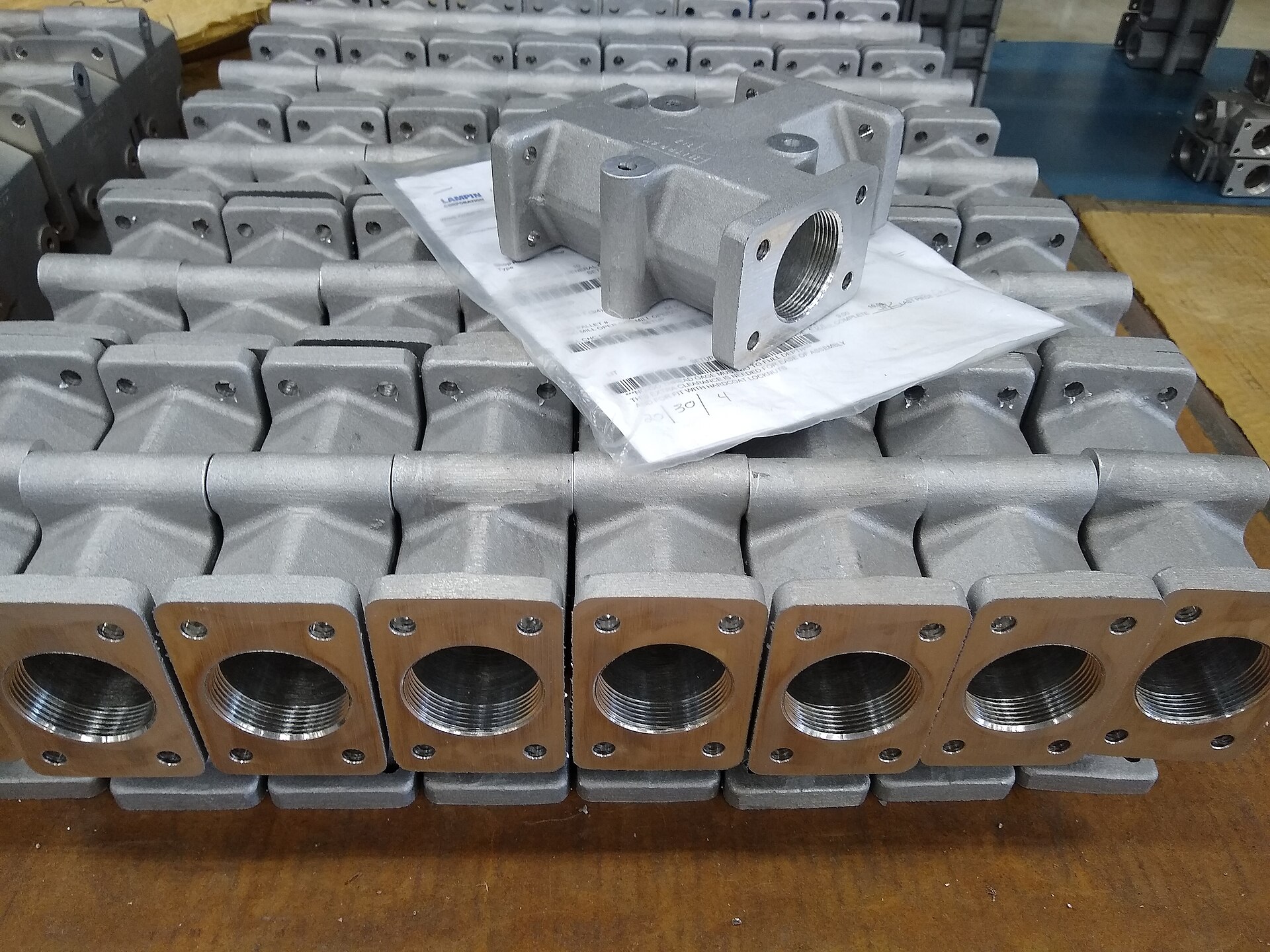
Parts in Production Materials
From aluminium housings to steel brackets, the right stock is confirmed during project review based on supplier availability.
High-performance plastics for CNC machining.
| Material | Full Name | Characteristics | Typical Applications |
|---|---|---|---|
| ABS | Acrylonitrile Butadiene Styrene | Good impact resistance, easy to machine, cost-effective | Housings, enclosures, prototypes, consumer products |
| POM (Delrin) | Polyoxymethylene (Acetal) | Low friction, high stiffness, excellent dimensional stability | Gears, bearings, bushings, precision parts |
| Nylon (PA) | Polyamide (PA6, PA66) | Wear resistant, low friction, good chemical resistance | Bushings, gears, rollers, wear parts |
| PEEK | Polyetheretherketone | High temperature, chemical resistant, biocompatible, high strength | Medical devices, aerospace, high-temp applications |
| Polycarbonate (PC) | Polycarbonate | Transparent, impact resistant, good dimensional stability | Windows, shields, optical parts, safety equipment |
| PTFE (Teflon) | Polytetrafluoroethylene | Very low friction, chemical resistant, high temperature | Seals, gaskets, bearings, chemical handling |
| UHMW-PE | Ultra-High Molecular Weight Polyethylene | Extremely low friction, abrasion resistant | Wear strips, guide rails, chute liners |
Material Selection Guide
Brief Us Once
Share your material requirements once. We coordinate the supplier match and keep the specification consistent through production.
For Lightweight Parts
Choose aluminum alloys (6061, 7075) or engineering plastics (ABS, PC) for weight-critical applications.
For Corrosion Resistance
Stainless steel (304, 316), titanium, or PEEK for harsh chemical or marine environments.
For High Temperature
Stainless steel, titanium, or PEEK can withstand elevated operating temperatures.
For Wear Resistance
Hardened steels, POM (Delrin), Nylon, or UHMW-PE for sliding or impact applications.
For Electrical Conductivity
Copper, brass, or aluminum for electrical and thermal conductivity requirements.
For Cost Optimization
Mild steel, aluminum 6061, ABS, or Nylon offer good properties at lower cost.
Material availability and grades are confirmed during project review based on your specific requirements and the assigned manufacturing partner.
Need Help Selecting Materials?
Upload your project requirements and we'll help you choose the right material for your application.
Request a Quote